Energy Efficient House Design Need in Pakistan
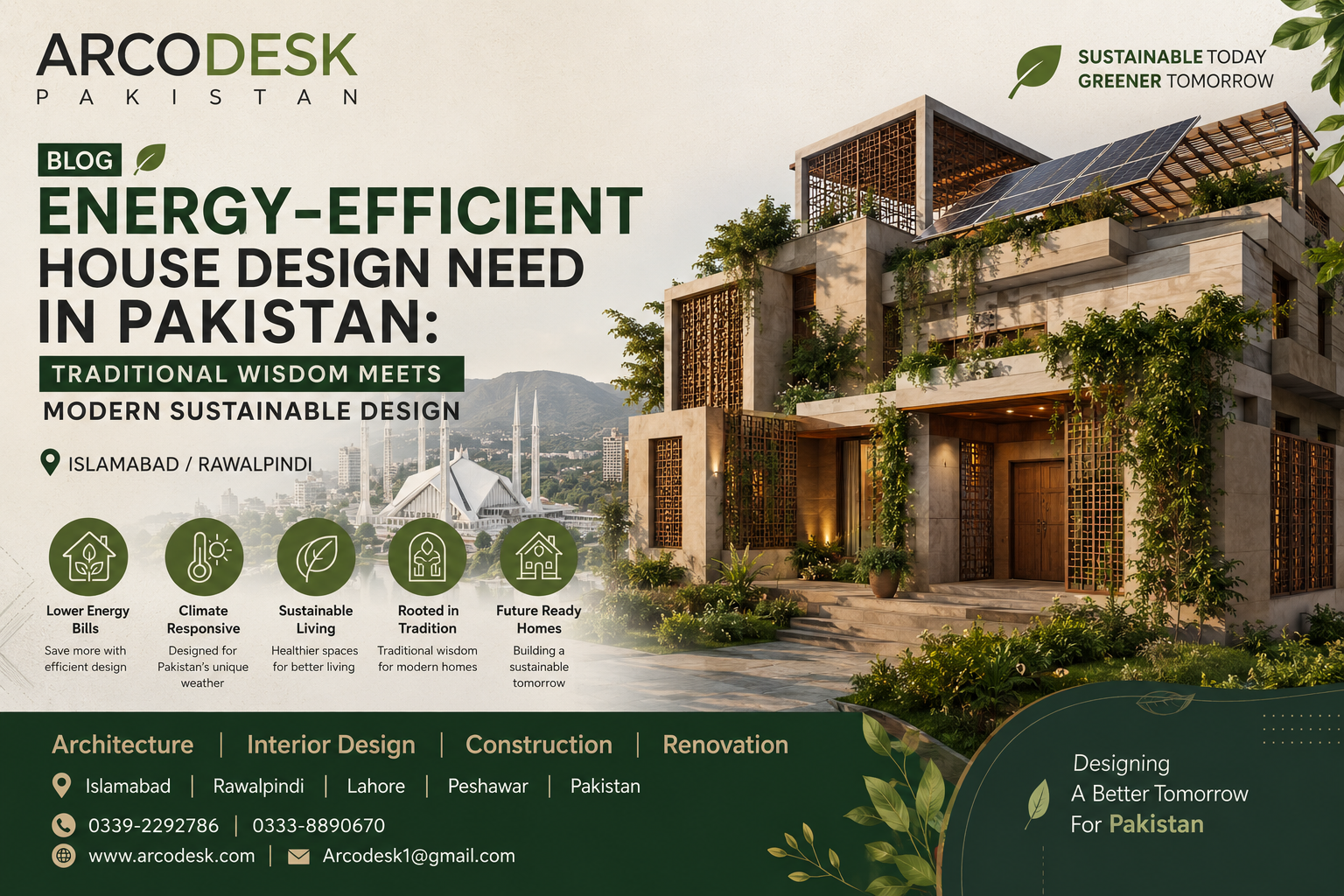
Energy-Efficient House Design Need in Pakistan: Traditional Wisdom Meets Modern Sustainable Design
As Pakistan faces rising electricity costs, increasing temperatures, and growing environmental concerns, the demand for energy-efficient houses has never been greater. Homeowners today are seeking smarter ways to reduce utility bills, improve indoor comfort, and create sustainable living environments. An energy-efficient house is not simply a modern trend; it is a practical solution that combines intelligent architectural planning, climate-responsive design, traditional building wisdom, and advanced construction technologies.
At ArcoDesk Pakistan, we believe that the future of residential construction lies in designing homes that consume less energy while providing maximum comfort and long-term value.
What Is an Energy-Efficient House?
An energy-efficient house is designed and constructed to minimize energy consumption while maintaining comfortable indoor temperatures throughout the year. Through proper orientation, natural ventilation, thermal insulation, daylight optimization, and renewable energy integration, these homes significantly reduce the need for artificial cooling, heating, and lighting.
In Pakistan’s climate, where summer temperatures often exceed 40°C, energy-efficient design can substantially reduce electricity consumption and dependence on air conditioning systems.
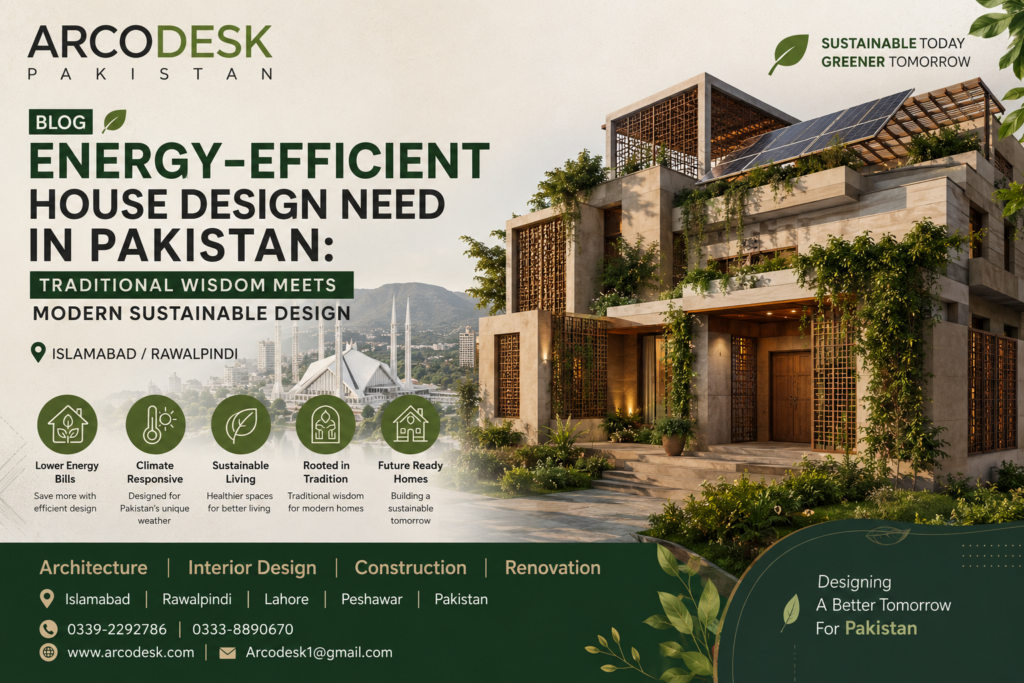
Why Pakistan Needs Energy-Efficient Homes
Pakistan is experiencing rapid urbanization, increased energy demand, and rising electricity tariffs. Traditional construction methods often fail to address the country’s climatic challenges, resulting in excessive energy consumption and uncomfortable indoor environments.
Energy-efficient homes offer several advantages:
- Lower monthly electricity bills
- Improved indoor comfort throughout the year
- Reduced dependence on air conditioners
- Enhanced property value
- Reduced environmental impact
- Better long-term sustainability
- Improved building performance and durability
For homeowners, investing in energy-efficient design is an investment in both financial savings and quality of life.
Traditional Energy-Efficient Techniques in Pakistani Architecture
Long before modern insulation materials and air-conditioning systems existed, traditional Pakistani architecture effectively responded to local climate conditions. These time-tested techniques remain highly relevant and can be integrated into modern residential design.
Courtyard-Based Planning
Traditional houses often featured central courtyards that created natural airflow and cooler microclimates. Courtyards improve cross-ventilation, increase daylight penetration, and provide shaded outdoor living spaces.
Thick Masonry Walls
Historic buildings utilized thick brick or stone walls that absorbed heat during the day and released it gradually at night. This thermal mass helped maintain stable indoor temperatures and reduced heat transfer.
High Ceilings
Traditional homes commonly featured higher ceilings that allowed hot air to rise above occupied spaces, naturally improving indoor comfort during summer months.
Verandas and Deep Overhangs
Shaded verandas and extended roof projections protected walls and windows from direct sunlight while reducing indoor heat gain.
Cross Ventilation
Carefully positioned windows and openings encouraged natural airflow throughout the house, reducing reliance on mechanical cooling systems.
Jaalis and Shaded Openings
Perforated screens, recessed windows, and shaded facades filtered sunlight, reduced glare, and improved thermal comfort while maintaining privacy.
These traditional strategies demonstrate that sustainable architecture has long been part of Pakistan’s architectural heritage.
Modern Energy-Efficient Design Strategies
While traditional techniques provide an excellent foundation, modern technologies further enhance building performance and energy savings.
Climate-Responsive Building Orientation
The orientation of a building significantly affects its energy performance. Proper positioning minimizes heat gain from harsh western sun exposure while maximizing natural daylight and ventilation.
Thermal Insulation
Insulating roofs and walls helps prevent unwanted heat transfer and maintains comfortable indoor temperatures.
Common insulation materials include:
- Extruded Polystyrene
- Expanded Polystyrene
- Polyurethane Foam
- Reflective insulation systems
Energy-Efficient Windows
Windows are often the largest source of heat gain in a building.
Recommended solutions include:
- Double-glazed windows
- Low-E glass
- UPVC window systems
- Thermally broken aluminum frames
These technologies reduce solar heat gain while maintaining natural light.
Natural Daylighting
Proper daylight design minimizes the need for artificial lighting during daytime hours. Large north-facing windows, skylights, light shelves, and open-plan layouts contribute to energy savings and occupant well-being.
Solar Energy Integration
Pakistan receives abundant sunlight throughout the year, making solar energy one of the most practical solutions for residential buildings.
Solar systems can provide:
- Electricity generation
- Water heating
- Outdoor lighting
- Net-metering opportunities
Energy-Efficient Lighting and Appliances
LED lighting, inverter air conditioners, efficient fans, and smart controls significantly reduce electricity consumption compared to conventional systems.
Best Materials for Energy-Efficient Houses in Pakistan
Material selection plays a critical role in building performance.
Recommended Wall Materials
- AAC Blocks (Autoclaved Aerated Concrete)
- Hollow Concrete Blocks
- Double Brick Walls with Air Gaps
- Insulated Masonry Systems
Roofing Materials
- Insulated roof slabs
- Reflective roof coatings
- Thermal insulation boards
- Cool roof technologies
Sustainable Finishes
- Low-VOC paints
- Reflective exterior coatings
- Locally sourced stone
- Recycled and sustainable materials
These materials improve thermal performance while reducing environmental impact.
The Hybrid Approach: Traditional Wisdom and Modern Innovation
The most effective energy-efficient homes in Pakistan combine traditional architectural principles with modern building technologies.
A successful energy-efficient house incorporates:
- Climate-responsive planning
- Courtyard design
- Cross ventilation
- Shaded outdoor spaces
- High thermal mass walls
- Roof insulation
- Energy-efficient glazing
- Solar power systems
- Sustainable construction materials
This balanced approach delivers superior comfort, lower operating costs, and enhanced environmental performance.
How ArcoDesk Pakistan Designs Energy-Efficient Homes
At ArcoDesk Pakistan, our design philosophy focuses on creating sustainable, climate-responsive homes tailored to Pakistan’s unique environmental conditions as per requirements of clients. Our integrated design-build approach combines architectural excellence, engineering expertise, and construction management to deliver energy-efficient homes that perform exceptionally well throughout the year.
Our services include:
- Architectural Design
- House Planning
- Structural Design
- MEP Design
- Interior Design
- Construction Management
- Project Supervision
- Sustainable Building Solutions
- Energy-Efficient House Design
Conclusion
Energy-efficient homes represent the future of residential construction in Pakistan. By combining traditional architectural wisdom with modern sustainable technologies, homeowners can enjoy lower energy costs, improved comfort, healthier living environments, and increased property value.
Whether you are planning a new home or renovating an existing property, investing in energy-efficient design is one of the smartest decisions you can make for your family’s future and for the environment.
Design Smart. Build Sustainably. Live Comfortably.
ArcoDesk Pakistan – Your Trusted Partner for Architecture, Interior Design, and Construction Solutions Across Pakistan.