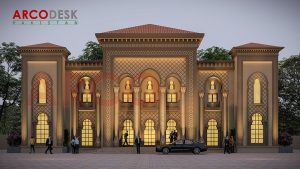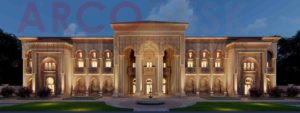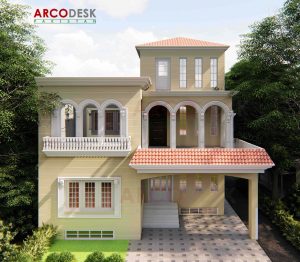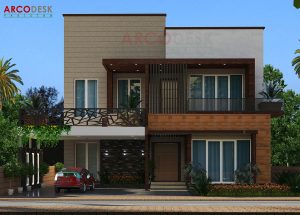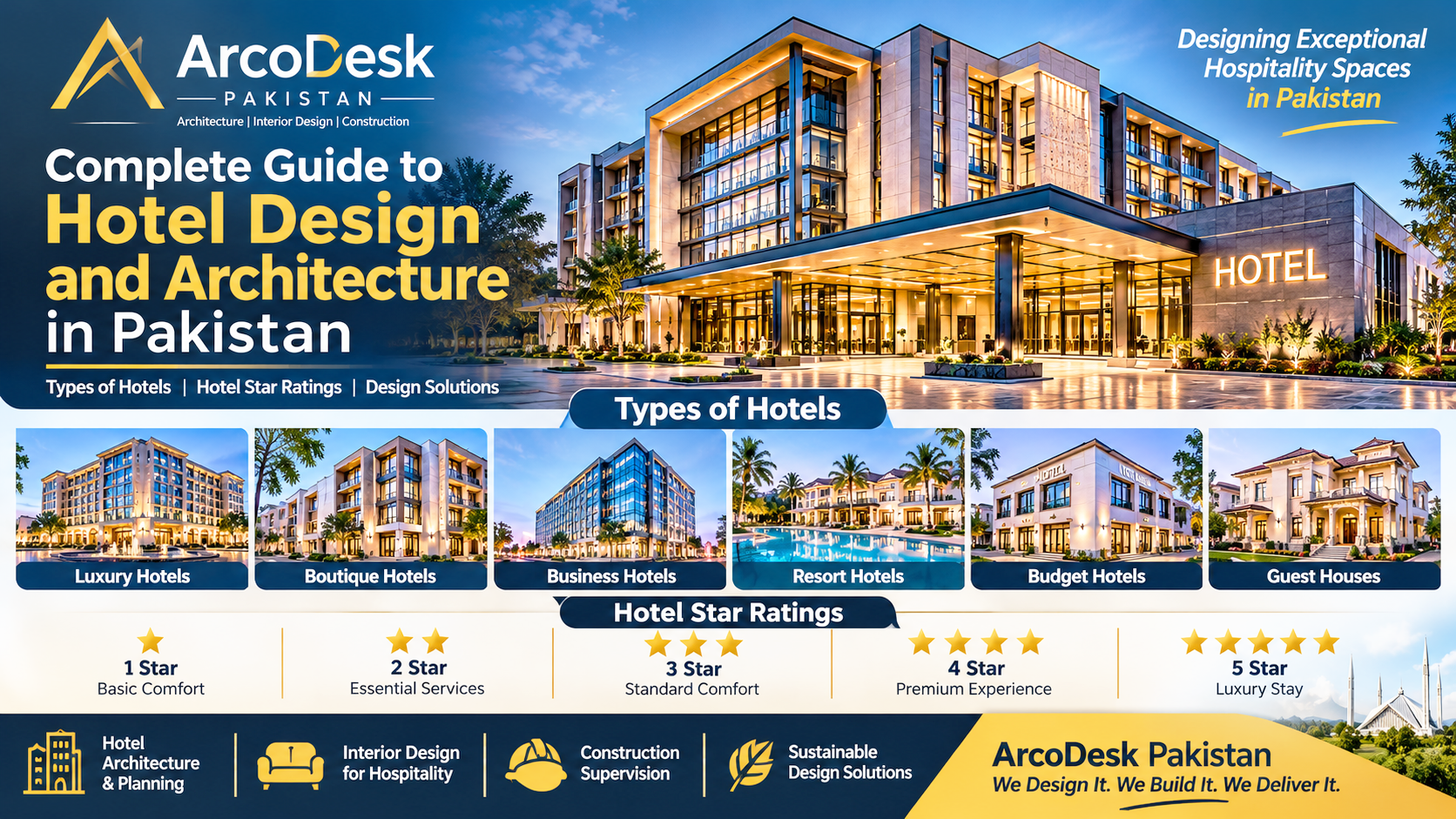
Complete Guide to Hotel Design and Architecture in Pakistan
Types of Hotels and Their Star Ratings: Complete Guide to Hotel Design and Architecture in Pakistan
The hotel and hospitality industry is an important part of tourism, business development and the commercial real estate sector in Pakistan. From affordable guest accommodation to premium five-star hotels, every hospitality project requires careful architectural planning, functional space management and attractive interior design.
Whether you are planning to construct a new hotel, develop a boutique property, establish a resort or renovate an existing hospitality building, understanding different hotel categories and their star ratings is an important first step.
At ArcoDesk Pakistan, we believe successful hotel development begins with intelligent architectural planning, innovative design and professional construction management. This guide explores the major types of hotels, their classifications, essential facilities and important architectural considerations.
1. What Are the Different Types of Hotels?
Hotels are classified according to their location, purpose, accommodation standards, facilities and target customers. Each category has different space requirements, architectural concepts and operational needs.
1. Luxury Hotels
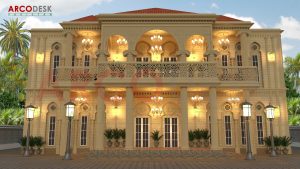
Luxury hotels are designed to provide an exceptional accommodation experience through premium facilities, sophisticated architecture and high-quality hospitality services.
These properties generally target international tourists, business executives, affluent travellers and VIP guests.
Main Features:
- Spacious guest rooms and luxury suites.
- Grand entrance and double-height reception lobbies.
- Fine-dining restaurants and premium cafés.
- Swimming pools, spas and fitness centres.
- Executive lounges and private meeting areas.
- High-end furniture, lighting and interior finishes.
- Banquet halls and conference facilities.
Luxury hotel architecture focuses on visual identity, guest comfort, privacy, functionality and premium material selection.
2. Boutique Hotels
Boutique hotels are generally smaller hospitality properties distinguished by their individual architectural character, creative interiors and personalized guest experiences.
Unlike conventional hotels, boutique properties often follow a specific design theme inspired by local culture, heritage or contemporary lifestyles.
Main Features:
- Distinctive architectural elevations.
- Customized interior concepts.
- Carefully designed guest rooms.
- Stylish reception and lounge areas.
- Creative lighting and furniture arrangements.
- Restaurants, cafés and outdoor seating.
Boutique hotel design is particularly suitable for tourism destinations, heritage buildings and urban commercial locations.
3. Business Hotels
Business hotels are developed primarily for corporate travellers, professionals, government officials and people visiting cities for meetings and commercial activities.
Their architectural planning emphasizes convenience, accessibility and efficient use of space.
Main Features:
- Functional guest rooms.
- Professional reception and waiting areas.
- Business centres and meeting rooms.
- Conference and training facilities.
- High-speed internet infrastructure.
- Restaurants and executive lounges.
- Convenient parking and transportation access.
A well-planned business hotel provides comfortable accommodation alongside productive working environments.
4. Resort Hotels
Resort hotels are typically developed in attractive natural environments, tourist destinations, mountainous regions and recreational locations.
Their design integrates accommodation, recreation, landscaping and leisure activities into one hospitality destination.
Main Features:
- Landscape-oriented master planning.
- Scenic guest rooms and private balconies.
- Swimming pools and recreational facilities.
- Outdoor restaurants and cafés.
- Spa and wellness centres.
- Family entertainment spaces.
- Walking trails and landscaped gardens.
In Pakistan, resort hotel architecture has considerable potential in destinations such as Murree, Nathia Gali, Swat, Hunza and other tourist regions.
5. Budget and Economy Hotels
Budget hotels provide affordable accommodation for travellers who require essential facilities without the additional expenses associated with luxury properties.
The architectural objective is to create comfortable, functional and economical spaces while maintaining appropriate safety and building standards.
Main Features:
- Compact and practical guest rooms.
- Efficient bathroom layouts.
- Functional reception areas.
- Durable flooring and wall finishes.
- Basic dining facilities.
- Optimized circulation and service areas.
- Cost-effective building materials.
Proper space planning and efficient building design are particularly important for this category.
6. Extended-Stay Hotels
Extended-stay hotels are designed for guests who require accommodation for several weeks or months.
They are commonly used by corporate employees, consultants, project teams, relocating families and long-term visitors.
Main Features:
- Spacious rooms or apartment-style suites.
- Kitchenettes and dining spaces.
- Laundry facilities.
- Workstations and storage.
- Comfortable living areas.
- Housekeeping and maintenance services.
The architectural concept combines hotel services with the functionality of residential accommodation.
7. Airport Hotels
Airport hotels are developed near international and domestic airports to accommodate transit passengers, airline staff, business travellers and tourists.
Their planning prioritizes accessibility, efficient operations and sound control.
Main Features:
- Convenient airport connectivity.
- 24-hour reception services.
- Sound-insulated guest rooms.
- Shuttle and transportation facilities.
- Restaurants and waiting lounges.
- Efficient drop-off and parking arrangements.
8. Heritage Hotels
Heritage hotels are developed within historically significant buildings, traditional residences, palaces and restored architectural properties.
These projects combine cultural preservation with modern hospitality requirements.
Main Features:
- Conservation of original architectural elements.
- Traditional materials and design details.
- Carefully integrated modern facilities.
- Restoration and adaptive reuse.
- Cultural interior design.
- Contemporary fire and life-safety improvements.
Heritage hotel projects require specialized architectural expertise to protect historical character while providing functional accommodation.
2. Hotel Star Ratings: From One-Star to Five-Star Hotels
Hotel star ratings are commonly used to communicate the general standard of accommodation, facilities and hospitality services. Classification requirements vary between countries and relevant hotel-rating authorities.
The following descriptions provide a general understanding of the five commonly used star categories.
One-Star Hotel – Basic Accommodation
One-star hotels offer essential accommodation for budget-conscious travellers.
Typical facilities include:
- Basic furnished guest rooms.
- Essential sleeping arrangements.
- Standard bathroom facilities.
- Basic housekeeping.
- Reception and guest assistance.
Two-Star Hotel – Economy Accommodation
Two-star hotels provide improved comfort and additional facilities compared with basic accommodation properties.
Typical facilities include:
- Well-maintained guest rooms.
- Private bathrooms.
- Regular housekeeping.
- Reception services.
- Basic breakfast or dining arrangements.
- Additional guest amenities.
Three-Star Hotel – Standard Accommodation
Three-star hotels offer a balanced combination of comfort, services and affordability.
Typical facilities include:
- Comfortable and properly furnished rooms.
- Restaurant and dining facilities.
- Professional reception services.
- Meeting or business facilities.
- Parking arrangements.
- Improved interior finishes.
- Additional guest services.
Four-Star Hotel – Premium Accommodation
Four-star hotels provide enhanced accommodation standards, premium interiors and a wider range of guest facilities.
Typical facilities include:
- Premium guest rooms and suites.
- Quality restaurants.
- Fitness and wellness facilities.
- Conference and banquet halls.
- Professional hospitality services.
- High-quality architectural finishes.
- Enhanced recreational facilities.
Five-Star Hotel – Luxury Accommodation
Five-star hotels represent the luxury segment of the hospitality industry, combining sophisticated architecture, comprehensive facilities and high standards of personalized service.
Typical facilities include:
- Luxury guest rooms and executive suites.
- Premium restaurants and fine dining.
- Swimming pools and wellness centres.
- Luxury reception and lobby spaces.
- Banquet and international conference facilities.
- Concierge and personalized guest services.
- High-end furniture, lighting and materials.
- Extensive recreational and business facilities.
Note: These descriptions are general industry guidelines, not official certification criteria. Actual star classification depends on the applicable country’s regulatory framework and assessment authority.
3. Comparison of Different Hotel Categories
| Star Rating | General Category | Main Focus |
|---|---|---|
| 1-Star | Basic | Essential accommodation |
| 2-Star | Economy | Affordability and comfort |
| 3-Star | Mid-range | Standard facilities and services |
| 4-Star | Premium | Enhanced comfort and facilities |
| 5-Star | Luxury | Comprehensive luxury experience |
4. Important Architectural Requirements for Hotel Design
A successful hotel project requires much more than an attractive building elevation. It involves comprehensive architectural planning, engineering coordination, efficient circulation and a well-organized operational layout.
A. Hotel Site Selection and Master Planning
Site selection is one of the most important decisions in hotel development.
Architects consider:
- Location and road connectivity.
- Accessibility for guests and service vehicles.
- Parking and entrance arrangements.
- Building orientation and natural lighting.
- Site topography and drainage.
- Landscape and outdoor spaces.
- Future expansion opportunities.
B. Functional Space Planning and Zoning
Hotel buildings should be organized into clearly defined functional areas to ensure smooth operations.
The major zones include:
Public Areas
- Entrance and reception.
- Main lobby and waiting lounge.
- Restaurants and cafés.
- Retail and commercial spaces.
Guest Accommodation
- Standard guest rooms.
- Executive rooms.
- Luxury suites.
- Corridors and guest circulation.
Administrative Areas
- Management offices.
- Staff facilities.
- Security and administration.
Service Areas
- Commercial kitchens.
- Laundry and housekeeping.
- Storage and maintenance.
- Loading and service access.
Recreational Areas
- Swimming pools.
- Fitness centres.
- Spas and wellness facilities.
- Gardens and outdoor seating.
C. Hotel Interior Design
Interior design plays a significant role in establishing the hotel’s identity and improving guest satisfaction.
Important interior design components include:
- Luxury hotel reception and lobby design.
- Guest room furniture and layouts.
- Modern bathroom design.
- False ceilings and lighting concepts.
- Flooring and wall finishes.
- Customized furniture and joinery.
- Material selection and colour coordination.
D. Structural and MEP Coordination
Hotel buildings require carefully coordinated engineering systems to support daily operations and guest safety.
Essential considerations include:
- Structural design and engineering.
- Electrical distribution and lighting.
- HVAC and ventilation systems.
- Plumbing and drainage.
- Fire detection and firefighting systems.
- Emergency exits and evacuation routes.
- Accessibility and safety requirements.
Professional coordination between architects and engineers helps minimize construction conflicts and improve building performance.
E. Sustainable Hotel Architecture
Modern hotel development increasingly requires energy-efficient and environmentally responsible design strategies.
Sustainable hotel planning may incorporate:
- Natural lighting and ventilation.
- Energy-efficient glazing.
- Solar energy systems.
- Water conservation.
- Efficient HVAC systems.
- Environmentally responsible materials.
- Rainwater management.
- Landscape and thermal comfort strategies.
These measures can contribute to reduced operating costs and improved environmental performance.
5. Hotel Architecture and Interior Design Services in Islamabad, Pakistan
Developing a successful hotel requires an integrated approach to architecture, interior design, engineering and construction management.
ArcoDesk Pakistan provides professional architectural and construction consultancy services for hospitality, commercial and residential developments.
Our services include:
- Hotel architectural design and planning.
- Hotel master planning and space optimization.
- Luxury hotel exterior and elevation design.
- Hotel lobby and reception interior design.
- Guest room and executive suite design.
- Restaurant, café and banquet hall design.
- Architectural working drawings.
- Structural and MEP coordination.
- 3D architectural visualization.
- BOQ and construction cost estimation.
- Hotel renovation and remodelling.
- Construction supervision and project coordination.
From initial concept development to detailed construction documentation, our focus is on creating practical, attractive and professionally coordinated architectural solutions.
6. Why Choose ArcoDesk Pakistan for Hotel Design and Construction?
Selecting an experienced architectural consultancy is an important step in any hospitality development.
At ArcoDesk Pakistan, we focus on combining architectural creativity with technical expertise and practical construction knowledge.
Our design philosophy emphasizes:
- Functional and efficient space planning.
- Contemporary and innovative architecture.
- Attractive and distinctive building elevations.
- Professional interior design solutions.
- Sustainable and climate-responsive concepts.
- Construction cost awareness.
- Engineering coordination.
- Quality-focused project execution.
Whether you are planning a boutique hotel, business hotel, resort, guest house or luxury hospitality development, professional architectural planning can help establish a strong foundation for your project.
Conclusion: Planning Your Next Hotel Development Project?
Hotel architecture is a combination of creativity, engineering, functionality and hospitality planning. Every category, from an economy hotel to a five-star luxury property, requires a design approach that responds to its intended guests, location, budget and operational requirements.
A professionally planned hotel can create a better guest experience, improve operational efficiency and contribute to the long-term value of the investment.
ArcoDesk Pakistan offers architectural design, interior design, construction consultancy and project coordination services for hospitality developments in Islamabad, Rawalpindi and across Pakistan.
Planning a new hotel, resort, guest house or commercial hospitality project?
Contact ArcoDesk Pakistan to discuss your architectural design and construction requirements.
ArcoDesk Pakistan – We Design It. We Build It. We Deliver It.
Website: https://arcodesk.com
Location: Islamabad, Pakistan
Professional Architecture | Interior Design | Construction Consultancy