Climate-Friendly & Energy-Efficient Housing Solutions for Flood-Affected Areas in Pakistan
Climate-Friendly & Energy-Efficient Housing Solutions for Flood-Affected Areas | ArcoDesk Pakistan
The 2025 floods in Punjab and Khyber Pakhtunkhwa (KP) have once again revealed how vulnerable our communities are to extreme weather events. Continuous rainfall, river overflows, and flash flooding have devastated districts such as Sialkot, Narowal, Gujrat, Jhang, and Buneer KPK, displacing families and destroying homes.
At ArcoDesk Pakistan, we believe this is not only a humanitarian crisis but also an opportunity to rebuild with resilience. Pakistan must adopt climate-friendly and energy-efficient housing solutions that protect lives, reduce costs, and contribute to long-term sustainability.
Why Climate-Friendly Housing is Essential
Traditional housing methods fail in flood-prone areas. Weak foundations, poor drainage, and non-resistant materials leave families exposed to recurring losses. Meanwhile, high energy demands from inefficient design increase household expenses.
Climate-friendly and energy-efficient housing addresses these challenges by:
Protecting families with flood-resilient design and materials.
Lowering energy costs through passive cooling, natural ventilation, and solar integration.
Reducing environmental impact with sustainable construction practices.
Ensuring compliance with Pakistan Building Code (PBC 2007, 2021 updates) and NDMA disaster resilience standards.
ArcoDesk Pakistan’s Solutions for Flood-Affected Communities
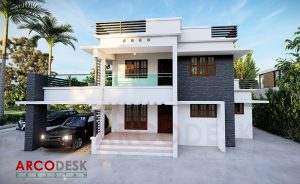
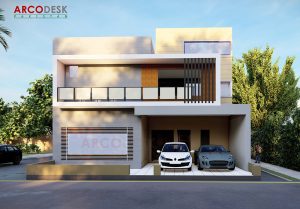
Our consultancy combines architectural design, structural engineering, and technical supervision to deliver durable and affordable housing. Key strategies include:
Elevated Foundations: Raising plinth levels above known flood heights.
Reinforced Structures: Strong concrete and pile foundations for waterlogged areas.
Energy-Efficient Layouts: Designing homes with natural light, airflow, and solar potential.
Durable, Flood-Resistant Materials: Using stabilized blocks, concrete mixes, and protective finishes.
Water Management Systems: Proper drainage, slope planning, and rainwater harvesting.
Community-Based Planning: Multipurpose shelters adaptable for emergencies.
Supervision and Accountability for Projects
Accountability is as critical as design. That is why ArcoDesk Pakistan provides:
On-site architectural and engineering supervision.
Material and quality verification to prevent compromise.
Transparent reporting for donor audits and government oversight.
Training programs to equip local builders with resilient construction methods.
Why Donors and Government Agencies Must Act
Without resilient housing, communities will remain trapped in cycles of loss. Investment in climate-friendly and energy-efficient housing ensures:
Safer homes for flood-affected families.
Lower long-term recovery costs for governments and NGOs.
Compliance with NDMA and global resilience frameworks.
Stronger community resilience to future climate risks.
The 2025 floods have shown that Pakistan cannot afford to rebuild homes without expert design and technical supervision. Every reconstruction effort must be guided by qualified architects and engineers to ensure safety, durability, and compliance with national standards.
We urge donor agencies and government institutions to step forward—not only with relief aid, but with sustainable housing solutions that truly protect affected families. By investing in expert-led design and supervision, partners can ensure that the people of Punjab and KP are not just rehoused, but rehoused in climate-friendly, energy-efficient, and flood-resilient homes.
ArcoDesk Pakistan stands ready to collaborate with all stakeholders to deliver these solutions and help transform recovery into a foundation for long-term resilience.
ArcoDesk Pakistan’s Commitment
As a trusted architectural and engineering consultancy, ArcoDesk Pakistan is committed to supporting donors, NGOs, and government agencies in building flood-resilient, energy-efficient, and sustainable housing.
Together, we can transform this tragedy into a model of safer, greener, and climate-adaptive development for Pakistan.