Rainwater Harvesting Systems for Homes in Islamabad.
Rainwater Harvesting Systems for Homes in Islamabad
Introduction
Water shortage is a major problem across the world, notably Islamabad. With an expanding population and shifting climatic patterns, providing a reliable water supply is critical. Rainwater collecting is an effective alternative that is becoming more popular. This approach entails collecting and storing rainwater for future use, reduce dependency on traditional water sources. In this post, we are going to look at the advantages, components, and execution of rainwater collecting systems for housing in Islamabad.
Benefits of Rainwater Harvesting
Rainwater harvesting has many advantages, making it a good choice for homes in Islamabad.
Water Conservation: By collecting and storing rainwater, homeowners may greatly reduce their dependency on municipal water supplies. This helps to save essential water supplies while reducing the load on community water systems.
Cost Savings: Using rainwater for non-potable applications like irrigation, toilet flushing, and clean can result in major savings on water usage. In the future, the initial investment in a rainwater collecting system might pay for itself in decreased utility bills.
Environmental Impact: Rainwater harvesting lowers stormwater runoff, which can lead to soil breakdown and water pollution. Homeowners can support the environment by collecting rainwater.
Independence from Water Controls: During times of shortages of water or extreme weather, municipalities extensively implement restrictions on water supply. Having a rainwater collection system provides a consistent alternate water source, allowing vital operations to continue uninterrupted.
Improved Garden Health: Rainwater is free of the toxic substances and chemicals found in conventional water, making it excellent for plant watering. Rainwater’s natural nutrients enhance gardens and lawns, resulting in better and more vibrant plant life.
Main Components of Rainwater Harvesting System
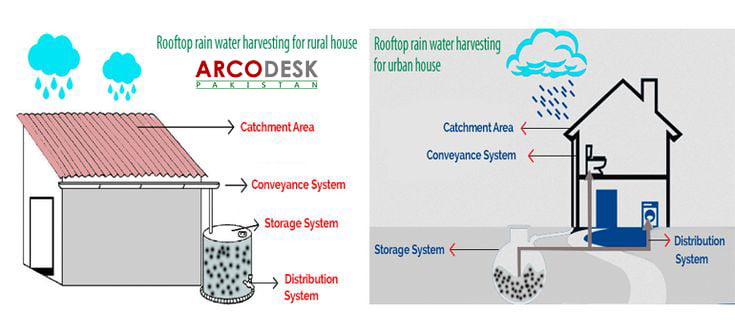
A typical rainwater harvesting system has many main components, each of which plays an important part in the collecting, filtration, and storage process.
Collection Area: The area that receives water is often the top of the home, where rainwater collects. The size and composition of the roof have an impact on the amount and quality of water that may be collected.
Water drainage systems and downspouts transfer rainfall from the roof to storage tanks. Gutters and downspouts that are properly built allow efficient water flow while preventing overflow and clogs.
First Clean Diverter: This device directs the first flow of rainfall, which may contain junk and impurities, away from the storage tank. It guarantees that only pure water enters the system.
Storage Tank:Storage tanks come in a variety of sizes and materials, including plastic, concrete, and steel. They save the gathered rainwater for future use.
Filtration System :A filtering system reduces impurities from stored water, ensuring that it is safe for non-potable usage. Filters range from basic mesh screens to complex systems with numerous stages of filtering.
Pump and Distribution System: If the stored water has to be moved about the house, a pump and distribution system are necessary. This guarantees that rainwater is easily accessible for various home purposes.
Implementing Rainwater Harvesting in Islamabad
Implementing a rainwater harvesting system in Islamabad involves several steps:
Assessment and Planning: First, examine the needs of your household consumption of water as well as the possible catchment area. Calculate Islamabad’s average rainfall to determine how much water may be collected. Based on this assessment, plan the entire system’s size and components.
System Design: Plan the rainwater harvesting system, including the location of gutters, downspouts, storage tanks, and filtering units. Ensure that the system adheres to local construction laws and regulations.
Installation: Hire a skilled contractor that has expertise installing rainwater harvesting systems. Proper installation is critical to the system’s effectiveness and duration.
Maintenance: Regular maintenance is required to keep the system running well. Clean gutters and downspouts regularly, check filters for blockages and inspect the storage tank for any indicators.
Utilization: Non-potable uses for collected rainwater include gardening, toilet flushing, and washing. Rainwater may be produced drinkable and cookable with extra treatment, enabling even more independence from municipal water supplies.
Conclusion
Rainwater harvesting is a practical and environmentally friendly solution to Islamabad’s water crisis. Homeowners that invest in a rainwater collecting system may save water, money, and protect the environment. Rainwater harvesting, with proper design, installation, and maintenance, can provide an affordable and environmentally friendly water source for communities in Islamabad, assuring a resilient and sustainable future.
For More Info Please Visit our Office or Contact with Team ArcoDesk
ArcoDesk Pakistan
ArcoDesk Pakistan Is Leading Architectural and Engineering Consultancy Firm in Pakistan.Design Studio of ArcoDesk Pakistan Provides Wide Range of Architectural and Engineering Services Like Architecture Design,Structural Design,MEP Design,Town Planning and Animation Services .